SEATED · NECK & SHOULDERS
Desk stretches you can do without leaving your chair
For a break close to your desk, try one of these three movements. Read the setup before beginning, stay within an easy range and give yourself time to release each stretch. You can do just one; this is not a circuit to finish.
By Pause · KCO Partners LLC · Published September 11, 2026 · Updated September 12, 2026
Part of Workplace stretching, the Pause workplace stretching series.
KEEP IT CLOSE
Your desk-stretch reference sheet
Choose one comfortable movement, or follow all three with time to settle and release. The holds total 90 seconds if you do both sides; allow extra time for setup and transitions.
Use a stable chair without wheels, support your feet and put down your devices. Move gently and breathe normally. Stop for pain, dizziness, tingling or numbness.
Side-of-neck stretch · 15 seconds per side
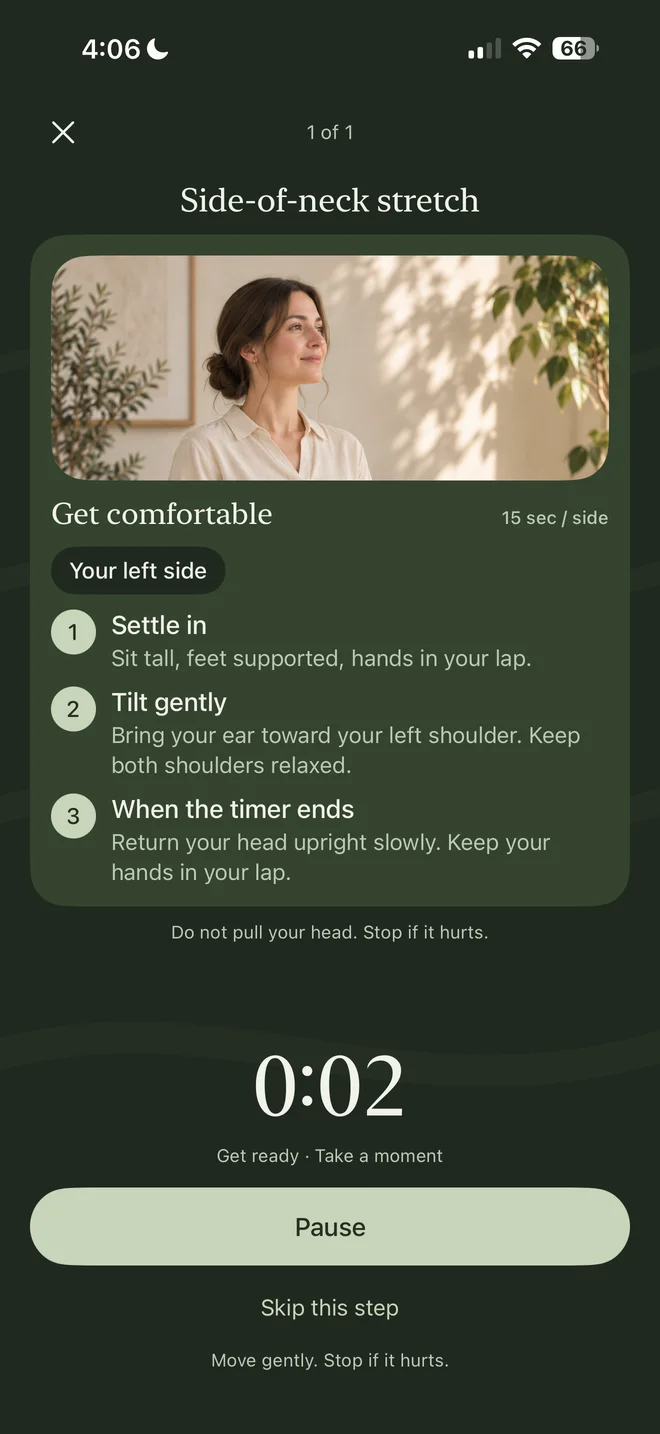
Sit tall, feet supported, hands in your lap. Bring your ear toward one shoulder. Keep both shoulders relaxed. Return your head upright slowly. Keep your hands in your lap. Repeat gently on the other side. Do not pull your head. Stop if it hurts.
Across-the-chest stretch · 20 seconds per side
Sit or stand with your torso facing forward. Bring one arm across your chest. Support the upper arm above the elbow with your other hand. Release the support and lower your arm slowly. Repeat gently on the other side. Keep the stretch gentle. Do not press on the elbow joint.
Chest opener · 20 seconds
Sit comfortably with feet supported and arms relaxed. Draw your shoulder blades toward each other. Keep your shoulders down and breathe normally. Relax your shoulders back into their comfortable starting position. Use a comfortable range. Stop if it hurts.
These are Pause’s sample hold times, not a prescribed routine. Skip any movement that does not suit you. For an injury, persistent pain or a condition affecting movement, ask a qualified clinician for individual guidance.
Background: NIH workplace stretches and Mayo Clinic upper-body stretches. Sources do not endorse Pause; its routines have not been clinically tested.
Full guide: pauseforwork.com/desk-stretches · Updated September 12, 2026
INSIDE PAUSE
A guided stretch, one step at a time
This actual app screen shows the side-of-neck guide: preparation, instructions for each side and a timer. Read the movement before you begin; you can skip a step whenever you need to.
Set up your chair first
Use a solid chair that will not roll, with enough space to move your arms. Let your feet rest on the floor or a stable support. Leave the keyboard alone while you stretch, and sit in a position that lets you breathe easily.
Follow the movement, not the clock
The hold times below come from Pause’s movement guides. They are not a target to endure if something feels wrong. A gentle sensation of stretch should stay comfortable. Release slowly and stop if you notice pain, dizziness, tingling or numbness.
When to choose a different break
If you have been seated for a long stretch of work, you may prefer a short walk when that is accessible to you. If you cannot leave your chair, a comfortable change of position can still be your break. Persistent symptoms need individual advice rather than repeated stretching.
Three seated stretches
01 · Seated or standing
Side-of-neck stretch
15 seconds per side
Sit tall with your feet supported. Keep your hands in your lap.
- Sit tall, feet supported, hands in your lap.
- Bring your ear toward one shoulder. Keep both shoulders relaxed.
- Return your head upright slowly. Keep your hands in your lap.
Release slowly, then repeat on the other side.
Do not pull your head. Stop if it hurts.
Further guidance: NIH workplace stretches
02 · Seated or standing
Across-the-chest stretch
20 seconds per side
Sit or stand comfortably. Keep your torso facing forward.
- Sit or stand with your torso facing forward.
- Bring one arm across your chest. Support the upper arm above the elbow with your other hand.
- Release the support and lower your arm slowly.
Release slowly, then repeat on the other side.
Keep the stretch gentle. Do not press on the elbow joint.
Further guidance: Mayo Clinic upper-body stretches
03 · Seated or standing
Chest opener
20 seconds
Sit comfortably with your shoulders relaxed and feet supported.
- Sit comfortably with feet supported and arms relaxed.
- Draw your shoulder blades toward each other. Keep your shoulders down and breathe normally.
- Relax your shoulders back into their comfortable starting position.
Use a comfortable range. Stop if it hurts.
Further guidance: Mayo Clinic upper-body stretches
Common questions
Can I do these stretches at a standing desk?
These movements can also be done standing if you feel steady and have enough space. Keep the same gentle range and relaxed shoulders.
Should I stretch while typing?
Pause typing first. Put down your devices so that you can follow the movement and release it without distraction.
General background: Mayo Clinic’s desk stretching guidance and NHS sitting exercises. These sources do not endorse Pause or validate its routines. Product instructions describe Pause’s current iPhone build.